Deeper, Hidden Meanings and Themes in Alice in Wonderland | Owlcation

Posted on by

The events in the story correlate with the steps in a child’s growth and progression through childhood and adolescence. According to editors Charles Frey and John Griffin, “Alice is engaged in a romance quest for her own identity and growth, for some understanding of logic, rules, the games people play, authority, time, and death.” When you approach the book with this idea in mind, it offers interesting and meaningful interpretations of the events and characters in the story.

read the complete article at Source: Deeper, Hidden Meanings and Themes in Alice in Wonderland | Owlcation

Category: History, People | Tags: , ,

Moral Panics – Subcultures and Sociology

Posted on by

WHAT ARE MORAL PANICS?

Moral panics are situations in which the general public experiences an unjustified panic about a specific social issue; politicians and other interested parties create moral panics to direct what the public worries about and focuses on. In his 1972 book Folk Devils and Moral Panics, Stanley Cohen set the stage for the sociological study of moral panics by examining the classic moral panic in 1960s Britain of violence between two subcultural groups: Mods and Rockers. Cohen expressed that the major issue was the “fundamentally inappropriate” reaction to social figures in society to the minor events that occurred (Goode and Ben-Yehuda 1994). Cohen defined a moral panic as the following:

Societies appear to be subject, every now and then, to periods of moral panic. A condition, episode, person or group of persons emerges to become defined as a threat to societal values and interests; its nature is presented in a stylized and stereotypical fashion by the mass media; the moral barricades are manned by editors, bishops, politicians and other right-thinking people; socially accredited experts pronounce their diagnoses and solutions; ways of coping are evolved or (more often) resorted to; the condition then disappears, submerges or deteriorates and becomes more visible. Sometimes the object of the panic is quite novel and at other times it is something which has been in existence long enough but suddenly appears in the limelight (Cohen 1972:9).

Since Cohen’s book on moral panics, more scholars continue to expand on this work. For example, McRobbie and Thornton (1995) claim that creating moral panics has become the way in which the media presents the public with everyday events.  They state that politicians and businesses alike use faulty logic to appeal to the public’s emotions which, in turn, serves their political and corporate agendas. This manipulation of moral panics leads to moral entrepreneurship: When a group claims that it knows the cause of and best solution for a societal issue (Critcher 2003).  The media also play a role in such manipulation.  They create a signification spiral in which they associate different social problems and raise alarm in the public (Hall et al. 1978). In a signification spiral, the media reduce deviant people to an easily recognizable–and often disturbing–image to create a scapegoat for a social issue. The link between moral panics and deviant subcultures is strong because many moral panics center around the creation of a caricature of a given subculture; a caricature that is often misinformed and that instills fear of the subculture into the public consciousness (Ben-Yehuda 1986). Some examples of subcultures that the media creates moral panics are goths, satanic worship, gamers, rave, heavy metal, and hip-hop. In order to put the idea of moral panics into context, a few examples from each time period, as well as a timeline, can be found throughout the page.

TIMELINE OF SIGNIFICANT MORAL PANICS

1950s: Comic Books 

1960s: Mods and Rockers

1970s: War on Drugs, Increase in Crime, Video Games and Violence, Crack Babies,

1980s: Dungeons and Dragons, Satanic Ritual Abuse, Super-Predators, Rock and Roll

1990s: Sex offenders

2000s: Human trafficking

Source: Moral Panics – Subcultures and Sociology

Category: nature | Tags: ,

A Deep Dive on End-to-End Encryption: How Do Public Key Encryption Systems Work? | Surveillance Self-Defense

Posted on by

In Review: Using Public Key Cryptography

Let’s review. Public key cryptography lets you encrypt and send messages safely to anyone whose public key you know.

If others know your public key:

  • They can send you secret messages that only you can decode using your matching private key and,
  • You can sign your messages with your private key so that the recipients know the messages could only have come from you.

And if you know someone else’s public key:

  • You can decode a message signed by them and know that it only came from them.

It should be clear by now that public key cryptography becomes more useful when more people know your public key. The public key is shareable, in that it’s a file that you can treat like an address in a phone book: it’s public, people know to find you there, you can share it widely, and people know to encrypt messages to you there. You can share your public key with anyone who wants to communicate with you; it doesn’t matter who sees it.

The public key comes paired with a file called a private key. You can think of the private key like an actual key that you have to protect and keep safe. Your private key is used to encrypt and decrypt messages.

Source: A Deep Dive on End-to-End Encryption: How Do Public Key Encryption Systems Work? | Surveillance Self-Defense

Category: People, Technology | Tags: ,

The real Lord of the Flies: what happened when six boys were shipwrecked for 15 months | Books | The Guardian

Posted on by

The truth is not so hard to come by if you look.

When a group of schoolboys were marooned on an island in 1965, it turned out very differently from William Golding’s bestseller, writes Rutger Bregman

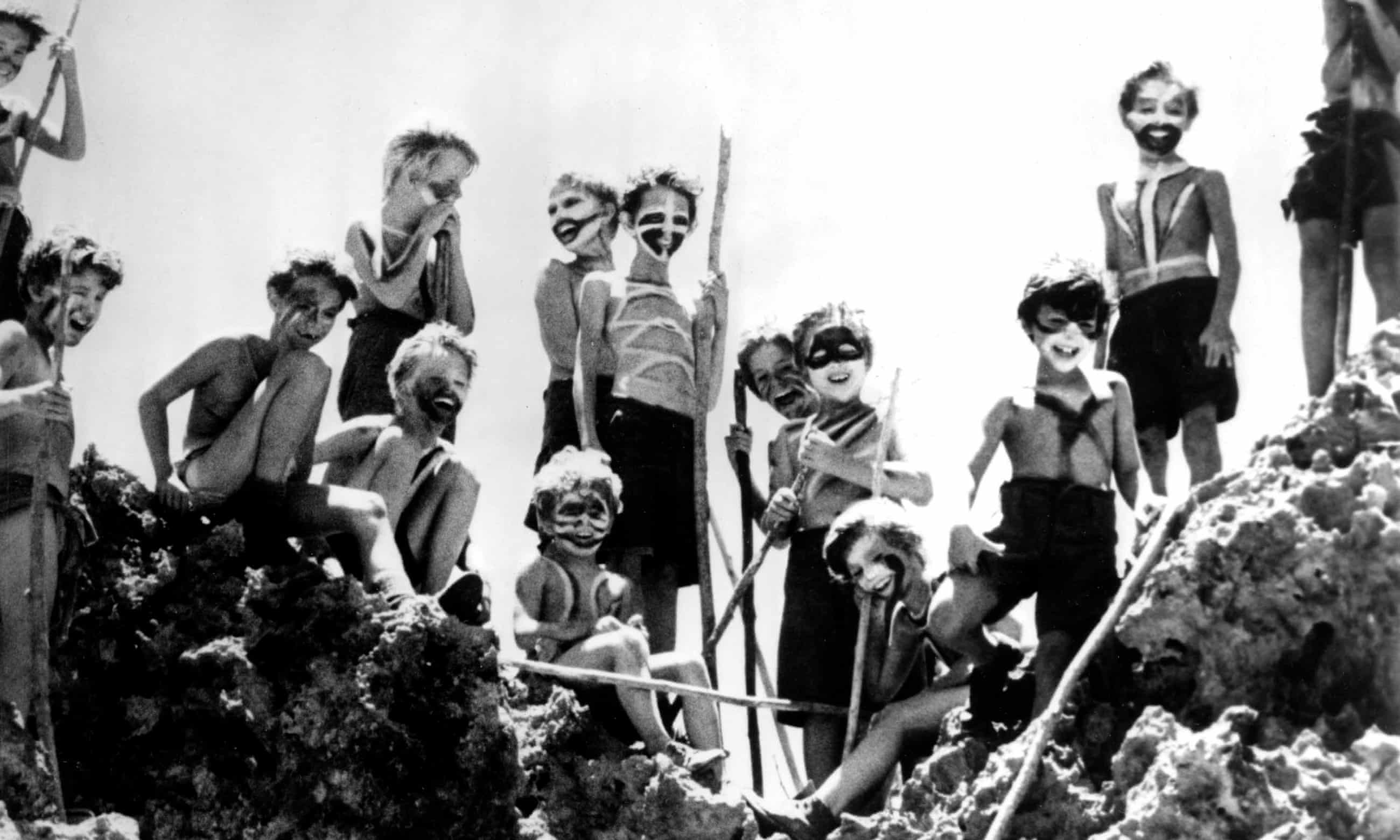
A still from the 1963 film of William Golding’s Lord of the Flies.
A still from the 1963 film of William Golding’s Lord of the Flies. Photograph: Ronald Grant

For centuries western culture has been permeated by the idea that humans are selfish creatures. That cynical image of humanity has been proclaimed in films and novels, history books and scientific research. But in the last 20 years, something extraordinary has happened. Scientists from all over the world have switched to a more hopeful view of mankind. This development is still so young that researchers in different fields often don’t even know about each other.

When I started writing a book about this more hopeful view, I knew there was one story I would have to address. It takes place on a deserted island somewhere in the Pacific. A plane has just gone down. The only survivors are some British schoolboys, who can’t believe their good fortune. Nothing but beach, shells and water for miles. And better yet: no grownups.

On the very first day, the boys institute a democracy of sorts. One boy, Ralph, is elected to be the group’s leader. Athletic, charismatic and handsome, his game plan is simple: 1) Have fun. 2) Survive. 3) Make smoke signals for passing ships. Number one is a success. The others? Not so much. The boys are more interested in feasting and frolicking than in tending the fire. Before long, they have begun painting their faces. Casting off their clothes. And they develop overpowering urges – to pinch, to kick, to bite.

By the time a British naval officer comes ashore, the island is a smouldering wasteland. Three of the children are dead. “I should have thought,” the officer says, “that a pack of British boys would have been able to put up a better show than that.” At this, Ralph bursts into tears. “Ralph wept for the end of innocence,” we read, and for “the darkness of man’s heart”.

This story never happened. An English schoolmaster, William Golding, made up this story in 1951 – his novel Lord of the Flieswould sell tens of millions of co

Source: The real Lord of the Flies: what happened when six boys were shipwrecked for 15 months | Books | The Guardian

Category: History, nature | Tags:

The Freedom Of Individuals Still Matters – Even If COVID Warriors Say It Doesn’t | Zero Hedge

Posted on by

Immanuel Kant expressed it best in his humanity principle, i.e., that man is an end and must never be treated as a means to an end. Individuals have different preferences, and only the individual may determine what is and is not in his own best interest.

Source: The Freedom Of Individuals Still Matters – Even If COVID Warriors Say It Doesn’t | Zero Hedge

Category: economics | Tags: