Category Archives: economics

“Decentralized Finance” – Welcome To The World’s First Fully-Transparent Bank | Zero Hedge

Posted on by

Authored by Omid Malekan via Medium.com,

Maker Shows The Way

The 2008 financial crisis had no single cause, and instead resulted from an amalgamation of factors that built up over time into one terrifying crescendo. They ranged from financial engineering to government policy, along with the twin tendencies of greed and fear. Many of those issues have been addressed since, but the opacity of the banking system remains, partly because there is no way get rid of it.

It’s hard for big companies to be transparent about their health because even insiders sometimes don’t know. The most terrifying moments of the crisis revolved around this hard truth. Banks have always had strict reporting requirements, and are even more closely watched today. But consolidation and the ancient systems most financial institutions still use make it hard to gauge their exact health  –  with one exception.

Welcome to the the world’s first fully transparent bank.

MakerDao is a blockchain project where users put up an asset as collateral and borrow money against it.It’s a decentralized bank that utilizes modern technology to replicate the oldest financial transaction in history — borrowing cash against an existing asset, an activity anyone who’s taken out a mortgage or bought stocks on margin is familiar with.

The project currently only accepts the native currency of the Ethereum blockchain as collateral, and lends a digital currency pegged to the dollar called Dai. Since it resides on a public blockchain, everyone can watch in real time as users all over the world put up collateral, borrow money, repay their loan with interest or, should the value of their collateral fall too much, get liquidated. Bankers and underwriters are replaced with smart contracts executing known rules. While every other bank in the world tells you what their lending practices are, Maker will show you.

Despite the negative associations of blockchain technology in regulatory circles, it offers a form of radical transparency that doesn’t exist elsewhere. The public knows more about the status of Maker than your typical CEO may about his own company. Despite having no official regulator, Maker is arguably the most regulated financial entity on earth, as anyone can scrutinize every loan. So while traditional banks require an army of employees, auditors and regulators to estimate a figure like their collateral ratio, Maker yields the exact number as of the next block. (398% as of block #7507738.) You can’t make this stuff up. Literally.

For now, MakerDao is relatively tiny, warehousing $356m in collateral and lending $89m against it. The projects rapid growth has led to more borrowing and stablecoin generation than there is currently demand for, leading to Dai occasionally breaking below the $1 soft peg. The community has tried to resolve this situation by raising the system’s interest rate — in the same fashion that a central bank might raise rates to defend its currency. Unlike a simpler fiat-backed stablecion, Dai is prone to drifting from its peg due to liquidity flows. But also unlike a fiat-backed stablecoin, Dai is truly decentralized and totally uncensorable.

In lieu of executives, Maker’s governance is handled through a digital token called MKR, a pseudo-equity stake in the success of the project. Ownership of that token gives anyone the right to vote on decisions like changing the interest rate. To incentivize responsible banking, MKR owners get to collect the interest payments the system generates. But to make sure that they don’t suffer from the same greed-fueled lowering of lending standards that contributed to the financial crisis, MKR owners are also buyers of last resort should the collateral backing the loans prove insufficient.

Just imagine: a bank where executive compensation, and not taxpayer funds, is used for a bailout.

Although legacy banks talk about inclusion and reaching the unbanked, they are limited by the laws of physics. The manual work of determining credit worthiness and issuing a loan has a minimal cost that makes the activity unprofitable for smaller loans. Maker’s automated processes on the other hand are value agnostic. Smart contracts don’t care if you want to borrow one dollar or one million dollars. They also don’t care, and don’t even know, about your age, gender or race. To the blockchain, we are all just numbers.

For all the controversy surrounding blockchain and its ill-begotten reputation as appealing primarily to criminals, it is in many ways a regulator’s dream come true. It replaces regulations written in thousand page bills and enforced by underpaid bureaucrats with elegant code. Although there is an open question of whether Maker’s governance token violated securities laws when it was issued, there is no doubt that its banking features are more compliant than any legacy bank can be — so much so that even regulators are starting to take notice. Just recently, the Chairman of the CFTC speculated that had this technology been around during the 2008 crisis, the government could have had a more effective response.

Maker is just one of a brand new class of “decentralized finance” projects that are starting to sprout on public blockchains. They include lending, money markets and even market making. Most are predicated on a simple question: other than being a trusted middleman, is there anything special about the services provided by a bank? If the answer is no, then the service can — and probably will — be disintermediated, with the key requirements of trust and liquidity being provided by a public ledger.

The basic human needs of trading value for time or security for profit has not changed for thousands of years, but how institutions go about providing them has. Blockchain enabled decentralized finance is the cutting edge of that evolution. It is unlikely that the transition will be as smooth as the faithful would like to believe, but the potential is large enough that even the biggest skeptics should pay attention.

Source: “Decentralized Finance” – Welcome To The World’s First Fully-Transparent Bank | Zero Hedge

Amish Money: 10 Frugal Lessons from the Amish :: The JB Bardot Archives

Posted on by

Sometimes “Need” Really Means “Want”Most people cultivate a sense of need for things they could live without. Since most aren’t driven by a culture that abhors amenities, it can take a financial crisis to help a person realize what he or she can give up. How many times have you said, or heard said something like, “A person has to have some comforts.” to justify that second television, or a luxury car, or something similar? If saving money is your goal, take a look around and figure out what the real…

Sometimes “Need” Really Means “Want”

Most people cultivate a sense of need for things they could live without. Since most aren’t driven by a culture that abhors amenities, it can take a financial crisis to help a person realize what he or she can give up. How many times have you said, or heard said something like, “A person has to have some comforts.” to justify that second television, or a luxury car, or something similar? If saving money is your goal, take a look around and figure out what the real necessities are.

Simple is Good

In many ways, the things we spend extra money on either complicate our lives or end up costing more in the long run. A self-propelled lawnmower doesn’t cut grass any better; it’s just easier and has more moving parts to replace. A brisk hike in the fresh air is just as effective as that 30 minute stroll on an expensive treadmill and you’ll enjoy it more. Manual hedge clippers are half as expensive as electric, less noisy and give your arms some exercise.

Grow Your Own

I know, not everyone can raise livestock or big crops, but most of us can grow a few vegetables or herbs, even if they’re of the miniature, indoor variety. You’ll save some money and get better tasting, healthier produce, too.

Many Hands Make Light Work – and Less Expense

When big projects arise in an Amish community, family and neighbors pitch in to get it done. Granted, if you live in the city, a barn raising is pretty much out of the question, but that doesn’t mean that family and friends can’t pitch in to mend that back fence or build a deck. Building codes in most cities will allow a homeowner to do their own home improvements and “employ” someone to help. You’ll need a permit for most work, and there will be inspections, but if you can’t afford a contractor, some free meals and maybe a case of beer might go a long way toward paying your friends.

Craftsmanship Isn’t About Expensive Tools

The reputation of Amish woodworkers is based on attention to detail, patience and secrets handed down through generations. Many of their tools are hand-made. You’re probably wondering what that has to do with saving money. It’s simple. Photographers can create awesome images without the top-of-the-line DSLR. Web developers can create great sites without owning the latest computer or software. Whatever you do, don’t get caught up in needing the biggest and best. Be the master of the tools you own and save some money.

Take Care of Your Tools

Keeping the tools of your trade longer doesn’t mean letting them fall apart. Any skilled craftsman knows that without proper maintenance, tools fail. Keeping your equipment in shape means it will perform better, longer. Having to replace them because of premature failure isn’t cost-effective.

Quality is Worth the Investment

One of the reasons Amish furniture is in such high demand is that it lasts. Because of the meticulous construction methods and hand-selected materials, many Amish pieces become heirlooms. Sometimes saving money means paying a little more for something that you’re not going to be throwing away soon. Naturally, this applies to much more than furniture.

Make the Most of Resources

To an Amish farmer, a cow is a source of dairy products and fertilizer. A grove of trees can provide building materials, but needs to be managed well, because it also produces game for the dinner table, as well as other natural foods. Crops are rotated carefully to optimize soil condition and help control crop disease. Careful resource management helps Amish communities sustain themselves with little help from the outside. We can all save money by learning to manage, recycle and repurpose what we have.

Get the Most Out of What You Have

Those horse-drawn prams the Amish are so well known for are also handed down, and repaired or reconditioned many times over. So it is with their other possessions. The basic principle is that if something serves its purpose, it doesn’t need to be replaced. Imagine how much money you can save by keeping your car a few years after it’s paid off. How about refinishing the dining table instead of replacing it? Make what you own last a little longer and you’ll save.

Gifts Don’t Have to Break the Bank

Traditional Amish gifts for birthdays, etc. are simple, practical items and usually singular. A tool or an item of clothing is typical. While there’s no need to adjust your gift giving quite that radically, it wouldn’t hurt to consider buying one very thoughtful gift instead of a dozen expensive ones.

When it comes to surviving hard times, the Amish have sustained their culture and communities in North America for centuries, while relying mostly on themselves. What better example for those of us trying to provide for ourselves and our families in today’s economy?

 Source: SavingAdvice.com — http://www.savingadvice.com/articles/2012/06/12/1010910_amish-money-10-frugal-lessons-from-the-amish.html

Source: Amish Money: 10 Frugal Lessons from the Amish :: The JB Bardot Archives

Category: economics, News you can use | Tags: ,

The Global Economic Reset Begins With An Engineered Crash | Zero Hedge

Posted on by

Authored by Brandon Smith via Alt-Market.com,

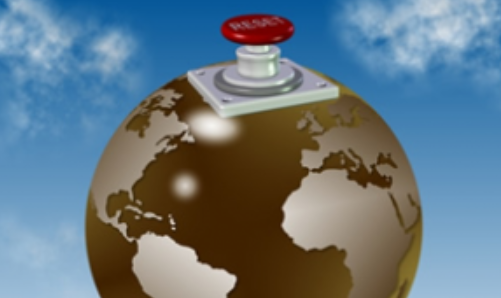
For a few years now, since at least 2014, the phrase “global economic reset” has been circulating in the financial world. This phrase is used primarily by globalist institutions like the International Monetary Fund (IMF) to describe an event in which the current system as we know it will either die out or evolve into a new system where “multilateralism” will become the norm. The reset is often described in an ambiguous way. IMF banking elites will usually mention the end results of the shift, but they say little about the process to get there.

What we do know is that the intent of the globalists is to use this reset to create a more centralized monetary system and micro-managed global economy. At the core of this new structure would be the IMF along with perhaps the BIS and World Bank.  It is a plan that has been supported openly by both western and eastern governments, including Russia and China.

As noted, the details are few and far between, but the IMF describes the use of open borders and human migrations during the reset as a means to transfer capital from various parts of the world. It is a novel if not utterly insane way to transfer wealth that only makes sense if you understand that the globalist goal is to deliberately conjure a geopolitical catastrophe.

The IMF also asserts that blockchain technology will make capital transfer easier and more efficient in this future environment, which explains the enthusiastic globalist support for developments in blockchain technology and cryptocurrencies despite the notion in cryptocurrency circles that blockchain would somehow make the bankers “obsolete”.

The IMF also acknowledges that in the meantime a slowdown in capital flows has occurred, and that this slowdown is ongoing since the crash of 2008. What they do not explicitly admit is that the crash of 2008 never ended, and that the decline we are witnessing today is merely an extension of the recession/depression that started ten years ago.

Certain facts have become obvious to anyone with any sense over the past year. First, as the Federal Reserve began tightening stimulus policies by raising interest rates and cutting assets from their balance sheet, the global economy began to return to steep declines not seen since the credit crisis. I predicted this outcome in my article ‘Party While You Can – Central Bank Ready To Pop The Everything Bubble’, published in January of 2018. The plunge has started in almost every sector of the economy, from housing, to autos to credit markets to retail. Now, even jobs, numbers which are highly manipulated to the upside, are beginning to falter.

The assertion in the mainstream media is that this recessionary downturn is new. This is not the case. What began in 2008 was an epic implosion of multiple national economies, and what we are seeing in 2019 is the final culmination of that process – The end game.

It is not a coincidence that the downturn started right after the Fed began tightening stimulus measures in 2017. With only a minor increase in interest rates and moderate cuts to their balance sheet, all the conditions the economy suffered in 2008 are suddenly returning. What this tells us is that the US economy and parts of the global economy cannot survive without constant and ever expanding central bank stimulus.

The moment the stimulus goes away, the crash returns.

Does this mean that central banks will try to keep QE going forever? No, it does not. So far, the Fed has not capitulated at all from the path of tightening. In fact, the Fed nearly doubled its normal balance sheet cuts from January 30th to the end of February, dumping over $65 billion in a 30 day period. The Fed also has not changed its dot plot projections for two more interest rate hikes this year. This means all the talk the past two months of the Fed going “dovish” was nonsense. Setting aside their rhetoric and looking at their actions, the Fed has been as hawkish as ever.

The only people who might find this to be news are most stock market daytraders, who ignore all other failing indicators and seem content to base their economic projections on equities alone. Set aside the fact that stocks plunged in December into near bear market territory. The bounce in January and February has convinced them that the Fed is stepping in and will not allow the economy to tank.  But the “plunge protection team” is about to pull the rug out from under their feet after training them like Pavlovian dogs to salivate at the sound of the word “accommodation”.

Their mindset is based on a host of incorrect assumptions.

To be clear, while the Fed paid lip service to “accommodation” in their public statements, it was not the central bank that stepped in monetarily to stall falling stocks. That was actually the Chinese central bank, pumping billions in stimulus into global markets at just the right moment.

Chinese stimulus coupled with pension fund buying at the start of this year saved stocks from losses beyond 20%, but markets have met resistance on the way up. Without renewed stimulus measures from the Fed, equities have topped out multiple times and refuse to move towards their previous highs. This suggests that the two month bounce is over, and that stocks will now fall back down to December lows and beyond. If the projections I made in January are correct, then the Dow will fall into the 17,000 – 18,000 point range from the end of March through April.

The facade is slowly but surely melting away, not just in economics, but everywhere. I predicted both the success of the Brexit vote as well as Trump’s win in 2016 based on the theory that the globalists would allow or even help populists to gain a political foothold, only to crash the economic system on their heads and then blame them for the disaster. So far my theory is proving correct.

Trump’s trade war continues unabated despite claims by many that it would be over quickly. Currently, there are no plans for a March summit between Trump and Xi, and the possibility of a summit anytime soon has come into question as Trump’s negotiations with North Korea fell to shambles last month. The negotiations are a farce and are not meant to succeed. I continue to hold to my position that the trade war is a planned distraction and that Trump is playing a role in a globalist scripted drama.

The facade of Donald Trump as a “populist candidate” is quickly ending. His cabinet is loaded with think-tank ghouls and banking elites, so this should come as little surprise. But there are still some analysts out there that naively believe that Trump is playing “4D chess” and that he is not the pied piper he now appears to be. What I see is a president that claimed during his campaign that he would “drain the swamp” of elites, then stacked his cabinet with some of the worst elites in Washington D.C. What I see is a president who argued against Fed stimulus measures and the fake stock market during his campaign, and who now has attached himself to the stock market so completely that any crash will now be blamed on him no matter the facts. What I see is a willing scapegoat; a president that is going to fail on purpose.

In terms of the Brexit, I still predict that there will be a “no deal” event, and that this is by design. The Brexit deal with the EU is slated to be decided in the next few weeks. A “no deal” outcome would be a perfect excuse for a major financial crisis in Europe, which is why I think it will happen. While sovereignty movements in the US will get the blame for the crash through Trump, sovereignty movements in the UK will get the blame for a crash in Europe through Brexit.

It is important to remind the public that this narrative is entirely false.

The economy has been in a state of animated death since 2008. Central bank stimulus acted as a kind of fiscal formaldehyde, keeping the visible signs of the crash at bay for 10 years but also creating a bubble even larger and more destructive than the one before. The “Everything Bubble” has now been primed to explode with maximum damage in mind.

The Fed started the tightening process for a reason; the establishment is ready to start the “global economic reset”, and they have their populist scapegoats in place. The crash in fundamentals returned in mid-2018, and I believe that crash will finally be acknowledged publicly by the media in mid-2019.

The point of it all is described in the very IMF interviews and documents I linked to above – Total centralization of the global economic framework, managed by the IMF. They describe it as “multilateralism” or a “multipolar world order”; this is meant to fool us into believing that the reset is about “decentralization”. It isn’t. They intend to move us from one unipolar economic structure to another unipolar economic structure that is even more centralized. That is all.

The crash itself is simply a means to an end. It is a tool to gain fiscal and psychological leverage against the public. The everything bubble was created for a reason. The Fed has tightened into economic weakness over the past year for a reason. The timing of Trump’s trade war and summit failures have happened for a reason. The timing of the Brexit chaos is happening now for a reason. The globalists are pulling the plug on economic life support today; the crash is engineered, and sovereignty movements are supposed to take the blame.

The best option at this time is to continuously force the issue of central bank culpability.  Liberty activists have to keep the focus on them and their criminal participation in economic sabotage, and we cannot assume that any government or political leader will be friendly to our cause.  The globalists have started the crisis, and we must finish it by making sure they are held accountable.

Source: The Global Economic Reset Begins With An Engineered Crash | Zero Hedge

LRFA: The Champion of Deception | musicFIRST Coalition

Posted on by

We’ll say it straight — every aspect of Big Radio’s latest campaign to maintain its profit margins is deceptive. 

So why is the National Association of Broadcasters touting this resolution so aggressively if it actually doesn’t protect local radio or promote the value of music? It’s quite simple – Big Radio doesn’t want to pay music creators for airplay of their work.

The headline from the National Association of Broadcasters’ (NAB) call to action states “Encourage Congress to support local radio!” advocating for the Local Radio Freedom Act. However, at its core, both the call to action and the resolution (that’s right LRFA is a resolution, not a piece of legislation) are not as they appear. As they do year after year, NAB will spend millions, wasting resources and time, just for this motion to (rightly) not become law.  We’ll give them that – NAB is persistent in its fight to avoid giving just compensation to music creators.

Let’s discuss all the reasons why The Local Radio Freedom Act is not what it seems – and the real motives behind the National Association of Broadcasters lobbying for it so aggressively.

First, the name of the resolution, “The Local Radio Freedom Act,” is disingenuous. While the name proclaims protection of local radio stations, the National Association of Broadcasters is actually doing the bidding of Big Radio corporations in this resolution. Across the industry, ten radio corporations own hundreds of stations in the U.S. These ten corporations are responsible for half of the revenue generated by the $17 billion radio industry. The usurpation of local radio stations means a drowning out of local voices. Media conglomerates mean fewer choices for music across the country. Never mind that the NAB is actively seeking to further consolidate the industry. Big Radio means local and indie musicians lack access to the airwaves, and music fans don’t benefit from diverse voices. If local radio will ever truly be “free,” it needs to be protected from large media conglomerates that deny them a healthy marketplace or the diversity of music that draws people to radio in the first place. Which leads us to our next point.

Radio has been struggling for years to remain innovative in the streaming era, where consumer choice is thriving. Even the images NAB uses in its marketing – images of young women listening to music in their car – are misleading. Data tells us those young women are probably not listening to the radio. With the meteoric rise of smart speakers and the proliferation of streaming services, millennials just aren’t tuning into AM/FM radio anymore. And with media conglomerates eliminating the prospect of discovering new music on the radio, especially the local ones, do we blame them? Think about it – when’s the last time you discovered new music on the radio?Usually, these songs have been streamed for weeks, maybe even months, before they actually hit the airways. There isn’t the same promotional value for airplay of songs on the radio as there was before the digital age. Still, the NAB uses the tired excuse that the LRFA recognizes the “promotional value” of music aired on “free, local radio stations.” For this promotion to exist, valuable audiences actually need to be listening to the music. They’re not.

So why is the National Association of Broadcasters touting this resolution so aggressively if it actually doesn’t protect local radio or promote the value of music? It’s quite simple – Big Radio doesn’t want to pay music creators for airplay of their work.

read the rest at the link below to be truly disgusted by Big Radio -dg

Source: LRFA: The Champion of Deception | musicFIRST Coalition

Category: economics, News you can use | Tags: , ,

Jim Kunstler : “You Can’t Over-Estimate The Damage We’ve Done To Ourselves” | Zero Hedge

Posted on by

Read the comments

What is your place now? A cubicle in the marketing department of Old Navy? An aisle in the Home Depot? A desk in the Diversity and Inclusion office of some State University, pushing to sort the student population into racial and sexual categories because all other ways of belonging in society are gone? Or do you occupy ten square feet of sidewalk with a tarp and a shopping cart? None of those places are liable to furnish a personal sense that life is worth living.

Those of you out there still sincerely clamoring for “change” might start asking yourselves if you have a clue about finding a place worth caring about in this country and what it might actually take to get there, including the revision of a lot of ideas in your head that you take for granted. Hint: if you’re looking for it in the current political leadership you are probably wasting your time and energy. If you’re looking for it in some group identity, you may not ever discover the power in your own individual ability to make choices for yourself.

Source: Jim Kunstler : “You Can’t Over-Estimate The Damage We’ve Done To Ourselves” | Zero Hedge